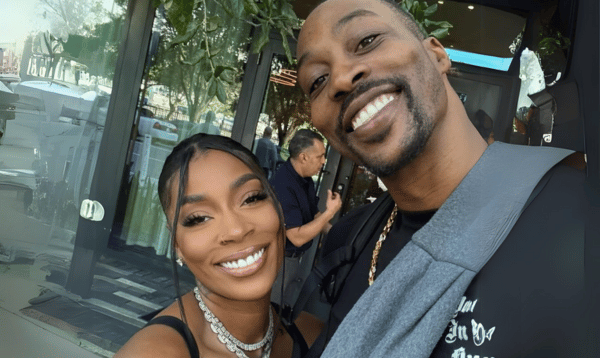
Dwight Howard CPS Crisis: Amy Luciani Details Daughter's Removal Amidst Alarming Claims
The private lives of public figures often play out in the harsh glare of social media, and few recent events have captivated the internet more than the unfolding crisis surrounding former NBA star Dwight Howard. At the heart of this storm is Amy Luciani, Howard's wife, whose tearful public declarations have painted a disturbing picture of their marriage, culminating in the heartbreaking revelation that their daughter was removed by Child Protective Services (CPS). This deeply personal saga brings to light serious allegations of substance abuse, marital strife, and a system struggling to ensure child safety.
Luciani's harrowing account has not only shocked fans but has also elicited a strong reaction from Royce Reed, another figure from Howard's past, who sees this unfortunate turn of events as a vindication of her own long-standing struggles. The unfolding drama underscores the complex challenges families face when issues of addiction, safety, and custody collide, particularly when under intense public scrutiny.
Amy Luciani's Heartbreaking Confession: A Marriage Unravels
In a series of emotional public statements, including a dimly lit video from her car, Amy Luciani, also known as Amber Rose Howard, laid bare the painful details of her marriage to Dwight Howard. With raw vulnerability, Luciani spoke of a relationship teetering on the brink, attributing its downfall to Howard's alleged severe drug use. Clutching what she described as a bag of white powdery substance, she articulated her fear and desperation, stating, "I’m f-cking losing my marriage to this sh-t."
The most alarming aspect of her revelations centered on the repeated intervention of Child Protective Services. Luciani claimed that CPS had visited their home three times in less than three months, culminating in a recent visit where they left with their daughter. This removal, she asserted, was a direct consequence of Howard's actions. She admitted to having protected him in the past, even lying to authorities and witnessing him coach their son on what to say, and claims to have video proof of these incidents.
Luciani's narrative is one of a woman pushed to her limit, expressing profound regret and shame for the situation. "I can admit right now I feel shame. I cringe when I see couples take their issues to the internet but I was humbled with understanding because now look what I have to do to protect myself," she wrote, emphasizing that her decision to go public was driven by a desperate need for self-protection and to advocate for her children. She detailed calling the police on Howard three times within their barely 14-month marriage, and recounted a chilling statement she attributed to him: "You said to protect yourself, you’d take anybody out, and that’s including me." Her claims paint a grim picture of a household fraught with fear and instability.
Royce Reed's Stinging Vindication and Critical Perspective
As Luciani's emotional testimony spread, it inevitably reached Royce Reed, the mother of Dwight Howard's 17-year-old son, Braylon. Reed, a former "Basketball Wives" cast member, wasted no time in making her feelings known, delivering a powerful "I told you so" message on social media. After years of being dismissed as "crazy" or "jealous" for her own past battles concerning Howard's involvement in their son's life, Reed felt entirely vindicated by Luciani's explosive allegations.
Reed's frustration stemmed from a decade-long struggle where her efforts to protect her son were often met with public skepticism and legal challenges that, she claims, sidelined her career. "It’s always been about the kids, fuck. It’s always been about the kids," Reed declared, directly addressing Luciani. She questioned Luciani's timing, highlighting the irony that Luciani chose to speak out only when directly implicated in the crisis.
While some accused Reed of "gloating," she clarified her stance, emphasizing that her concern was for the systemic failure to protect children, rather than deriving joy from the family's pain. "Who’s laughing? This is sad AF! These kids never should’ve been in his custody and she knew that! Look at the past!" Reed wrote, asserting that Luciani had previously "condoned and participated" in the very environment she was now fleeing. Reed's perspective offers a stark contrast, suggesting that Luciani's current distress, while valid, comes after a period where she allegedly overlooked warning signs for the sake of the relationship. This ongoing public dialogue between Luciani and Reed underscores the deep-seated emotional and historical complexities of navigating relationships with a high-profile individual like Dwight Howard. For more on Reed's perspective, explore
Royce Reed's Vindication: Dwight Howard's Child Custody Battle Explodes.
Understanding CPS Intervention: A Focus on Child Safety
The primary concern in the Dwight Howard CPS crisis, as in any situation involving Child Protective Services, is the safety and well-being of the children involved. CPS agencies are mandated by law to investigate allegations of child abuse and neglect. Their involvement is a serious matter, typically triggered by reports from concerned individuals, which can range from family members and neighbors to teachers and medical professionals.
The process often involves:
- Investigation: Social workers visit the home, interview parents, children, and other relevant parties to assess the child's living conditions and safety.
- Risk Assessment: They evaluate factors such as domestic violence, substance abuse, mental health issues, and neglect to determine the level of immediate danger to the child.
- Intervention: Depending on the findings, CPS may offer voluntary services to the family, implement a safety plan, or, in severe cases where a child is deemed to be in immediate danger, seek a court order to remove the child from the home.
Multiple visits from CPS, as Luciani described, indicate a pattern of concern that likely escalated over time. The decision to remove a child is never taken lightly and is typically a last resort when all other measures to ensure safety within the home have failed or are deemed insufficient. It reflects a judgment that the child's physical or emotional safety cannot be guaranteed by remaining in the current environment. For more details on the alarming claims made, including drugs and threats, refer to
Amy Luciani's Alarming Claims: Drugs, Threats, & CPS Interventions.
Navigating High-Stakes Family Disputes and Child Welfare
When family disputes involving substance abuse, threats, and allegations of neglect surface, especially in high-profile cases, the stakes are incredibly high, most notably for the children caught in the middle. The emotional toll on children experiencing such turmoil can be profound, impacting their development and sense of security.
For families navigating such challenging circumstances, whether in the public eye or privately, several key considerations and practical steps are vital:
- Prioritize Child Safety: Always ensure the child's immediate physical and emotional safety is the paramount concern. This may involve seeking temporary alternative living arrangements or cooperating fully with CPS.
- Seek Legal Counsel: Engage with experienced family law attorneys who specialize in child custody and CPS cases. Legal guidance is crucial for understanding rights, obligations, and the best course of action.
- Document Everything: Keep meticulous records of incidents, communications, and any professional interventions (e.g., police reports, CPS reports, medical records). This documentation can be critical evidence.
- Cooperate with Authorities: While challenging, open and honest communication with CPS and law enforcement is often in the best interest of the family and child. Obstructing investigations can have severe consequences.
- Seek Support: Parents and children benefit from mental health support, counseling, and support groups to cope with the stress and trauma of such situations.
The current situation highlights the complex interplay of personal struggles, legal frameworks, and the unwavering mandate to protect vulnerable children.
The unfolding Dwight Howard CPS crisis, detailed by Amy Luciani, serves as a stark reminder of the devastating impact that personal struggles can have on a family, particularly when compounded by substance abuse and allegations of an unsafe environment. Luciani's brave, albeit public, plea for help and protection underscores the immense pressure she felt. Coupled with Royce Reed's long-standing calls for accountability, the situation paints a grim picture of fractured relationships and the painful journey toward ensuring children's safety. Ultimately, the focus remains on the children, whose well-being is the singular goal of CPS intervention and the most important outcome in any such difficult circumstance.